


Design Operations at Crunchyroll
Enhancing Crunchyroll’s design operations to delight users
Please read Part One before proceeding for better context. Once you’re familiar
with the background, proceed with the implementation.
Background
Crunchyroll is a leading streaming service for anime and manga, recognized for its extensive library and dedicated fanbase.
Challenges
Crunchyroll faced slow design processes, fragmented communication, and lengthy project timelines. These challenges made it difficult to deliver high-quality designs quickly and consistently. Improving these areas was essential to maintaining competitiveness, enhancing user experience, and streamlining operations.
Goals
Our goals were to speed up time-to-market, boost design department budget ROI, and improve employee satisfaction. We aimed to give designers more time for iteration and experimentation, enhance collaboration and communication with development, product, and business teams, and make implementation more accessible for developers. By refining our processes, we sought to ensure a smoother workflow and better overall outcomes.
My role
As Senior Design Program Manager, I led the integration of Scrum and optimized design workflows, managed resource allocation, and coordinated cross-functional projects. I implemented a unified design system, streamlined communication with development and product teams, and ensured quality assurance. I improved efficiency, design maturity, and employee satisfaction by fostering a culture of innovation and maintaining a healthy work-life balance.


Encouraging innovation among designers and balancing Work and Life
I care deeply about our designers because their creativity brings our vision to life. Supporting their well-being and growth ensures they can continue to innovate and produce exceptional work that delights our users.
Enhancing Designer Success
Process Improvement
The enhanced processes were designed to help designers flourish by providing clear guidelines, reducing bottlenecks, and allowing more time for creative work and experimentation.
Work-Life Balance
The structured and predictable nature of the new workflows helped maintain a healthy work-life balance by reducing last-minute changes and unrealistic due dates.
Experimentation and Exploration
Innovation Sprints
Introduced dedicated innovation sprints, giving designers time and space to explore new ideas and approaches without the pressure of immediate project due dates.
Professional Development
Invested in ongoing training and development opportunities to ensure designers stay updated with the latest tools, trends, and best practices, fostering continuous growth and expertise.
Process
In August 2018, AT&T acquired Crunchyroll, and we were ready to experiment with new approaches to ongoing challenges.
Following my usual process of starting small, iterating, learning, adapting, and scaling, we switched from waterfall to Scrum. As part of the implementation process, I took the lead in integrating Scrum into one team, starting with the Mobile Design team.
Scrum Implementation
Two-Week Sprints
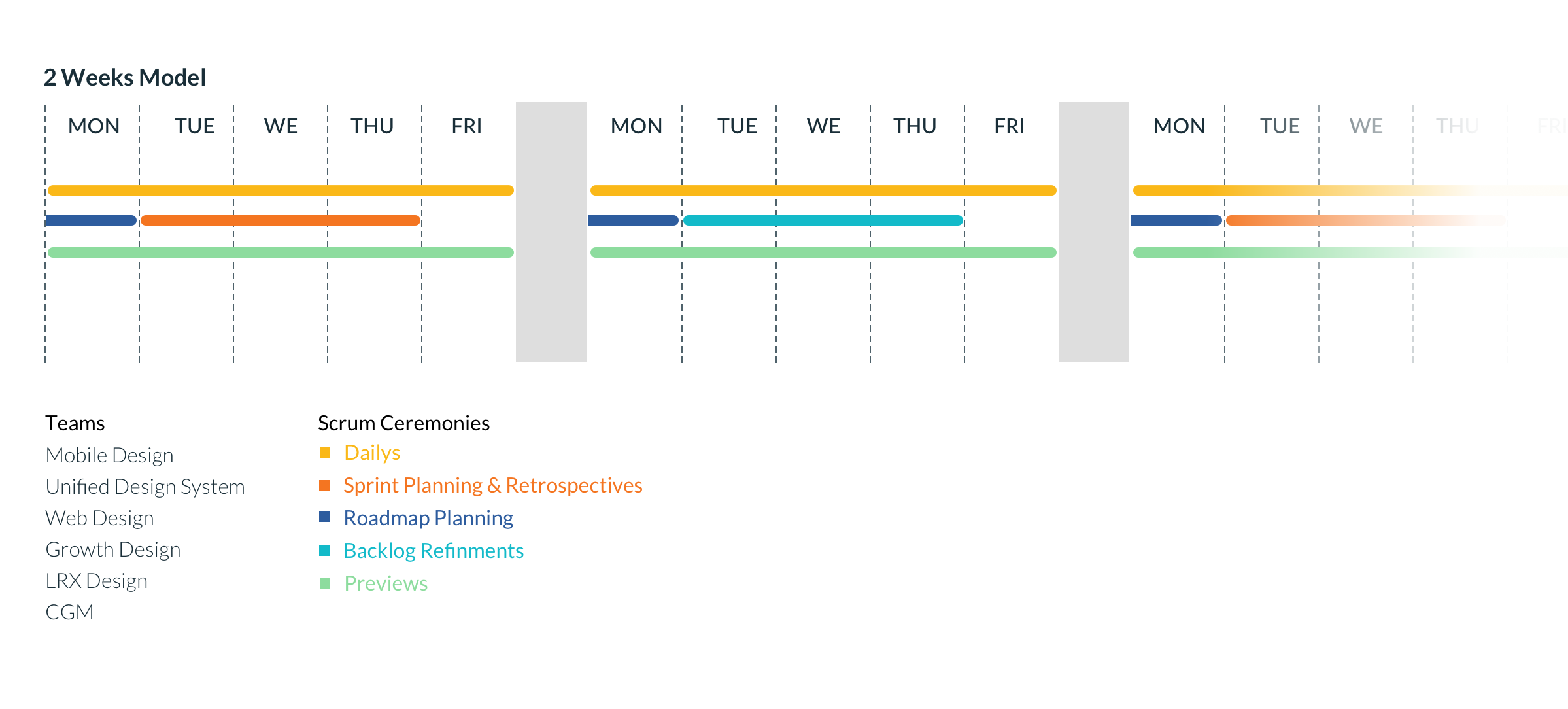
We introduced two-week sprints for the Mobile Design team, including daily standups, backlog refinement, sprint planning, and retrospectives. The pilot program metrics indicated good potential, prompting Leadership to expand the program to all design teams.
Team Onboarding
Based on the lessons from the Mobile Design team’s Scrum implementation, I successfully onboarded the LRX, Web Design, and UDS (Design Systems) teams.


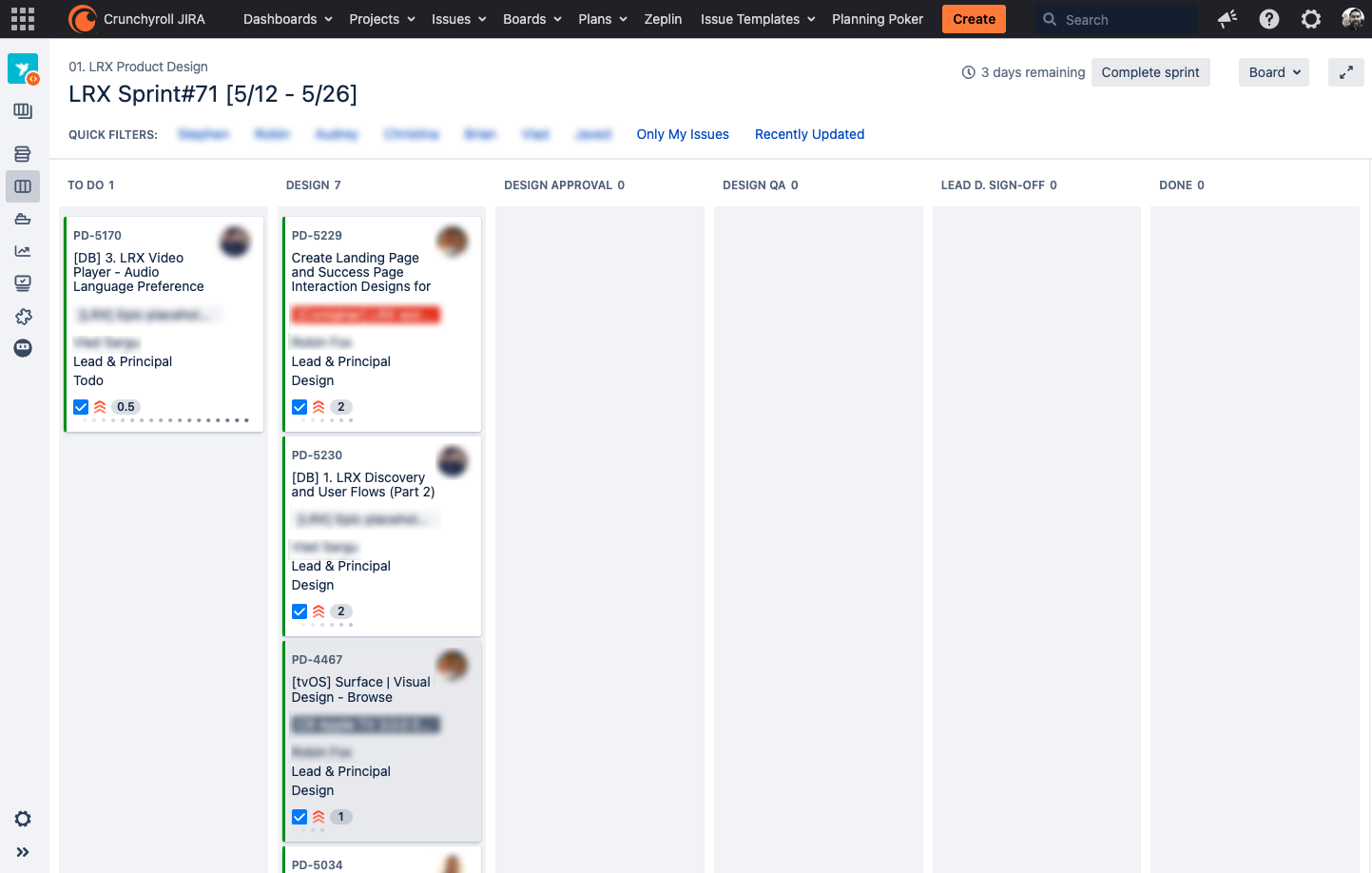
As of May 2022, we did #79 sprints on Mobile Design, #71 on LRX, and #70 with the Web design team.


Design Framework
Roadmap
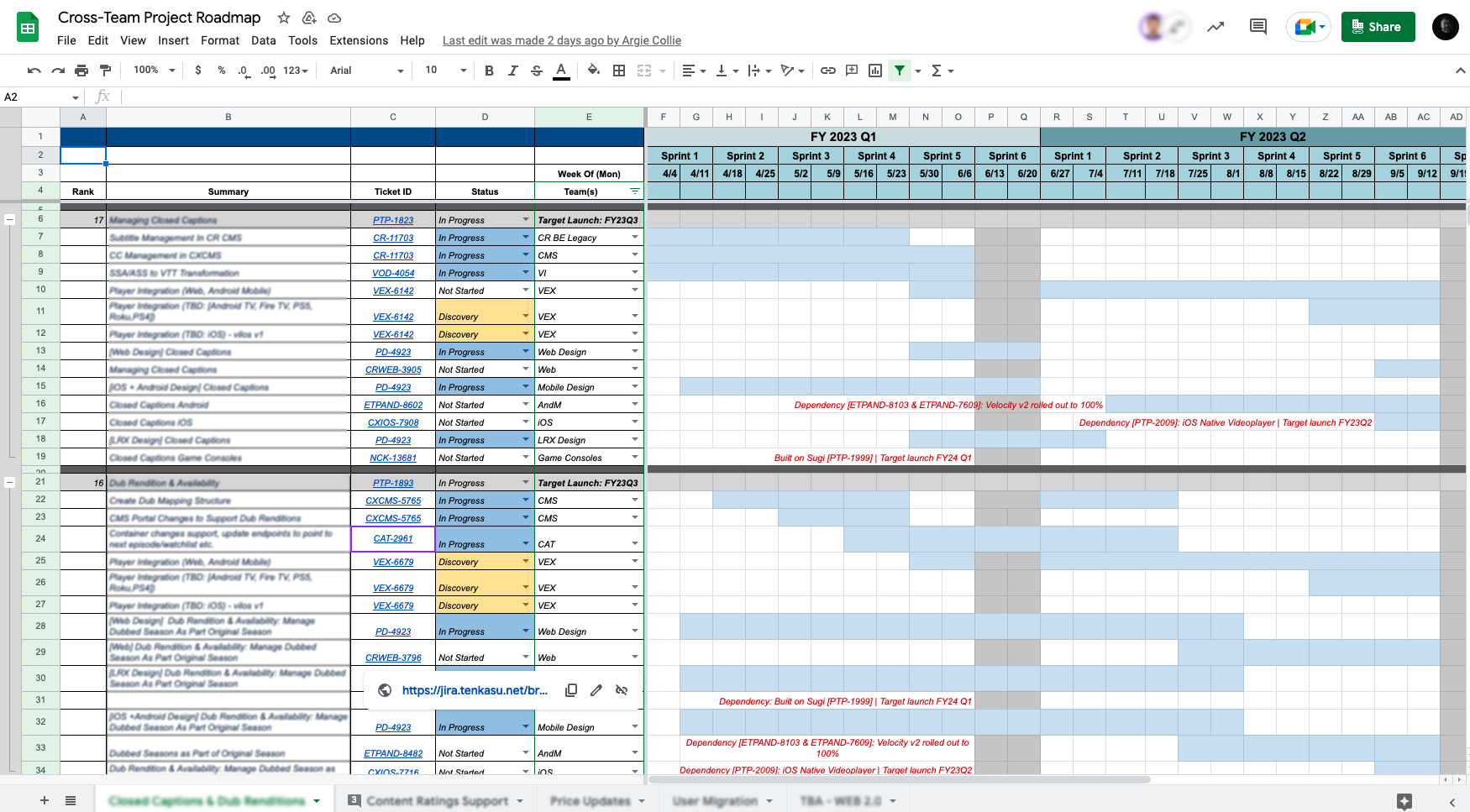
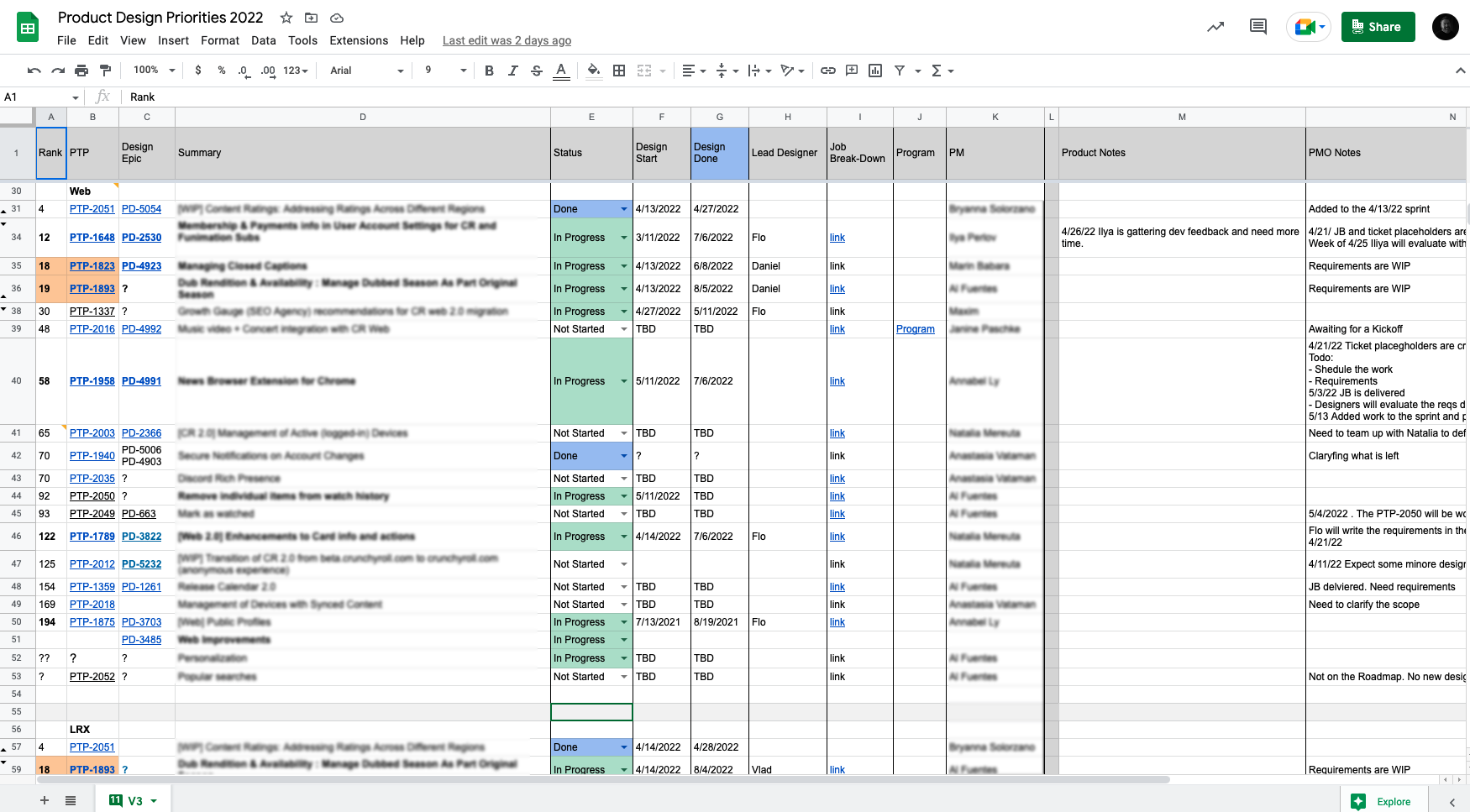
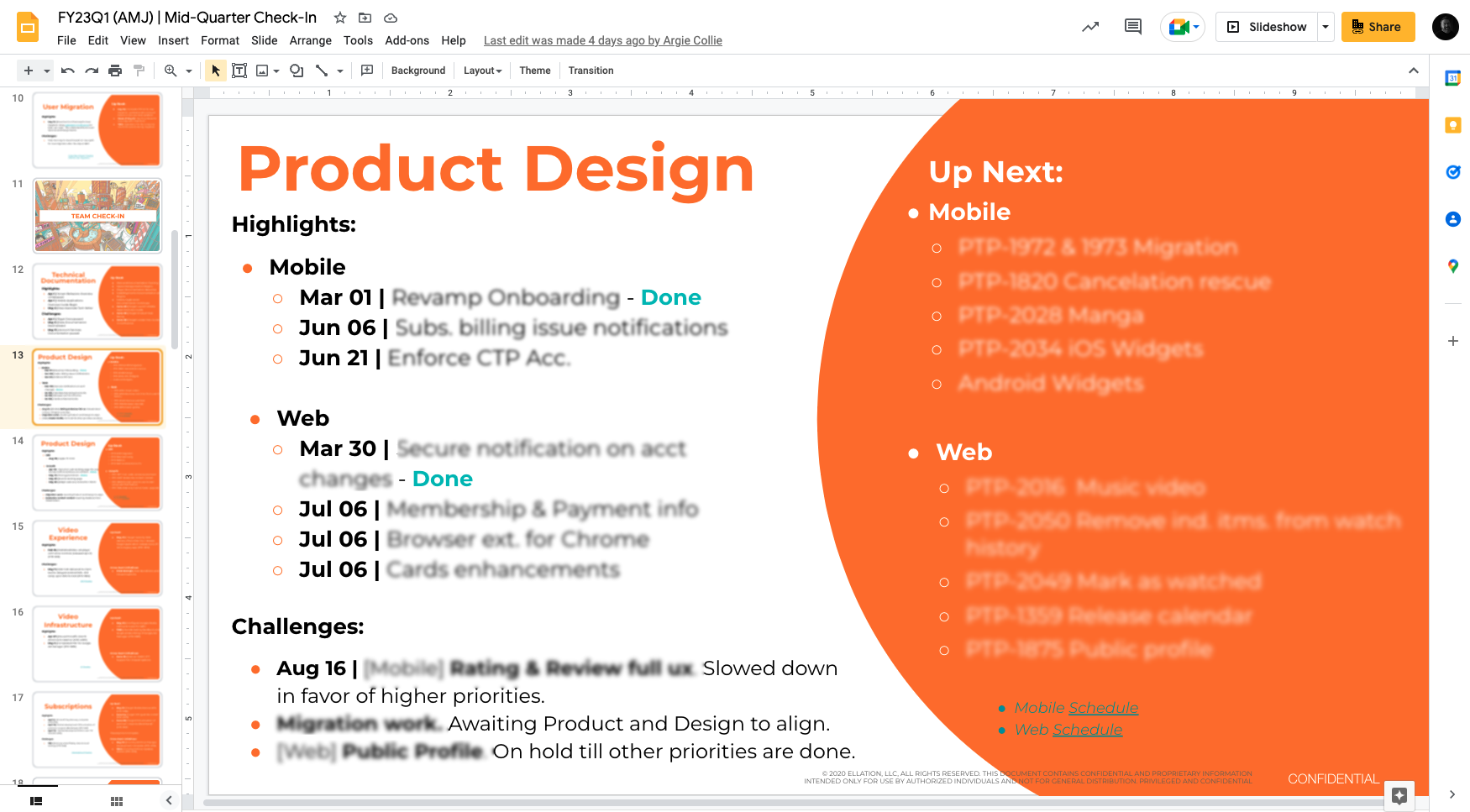
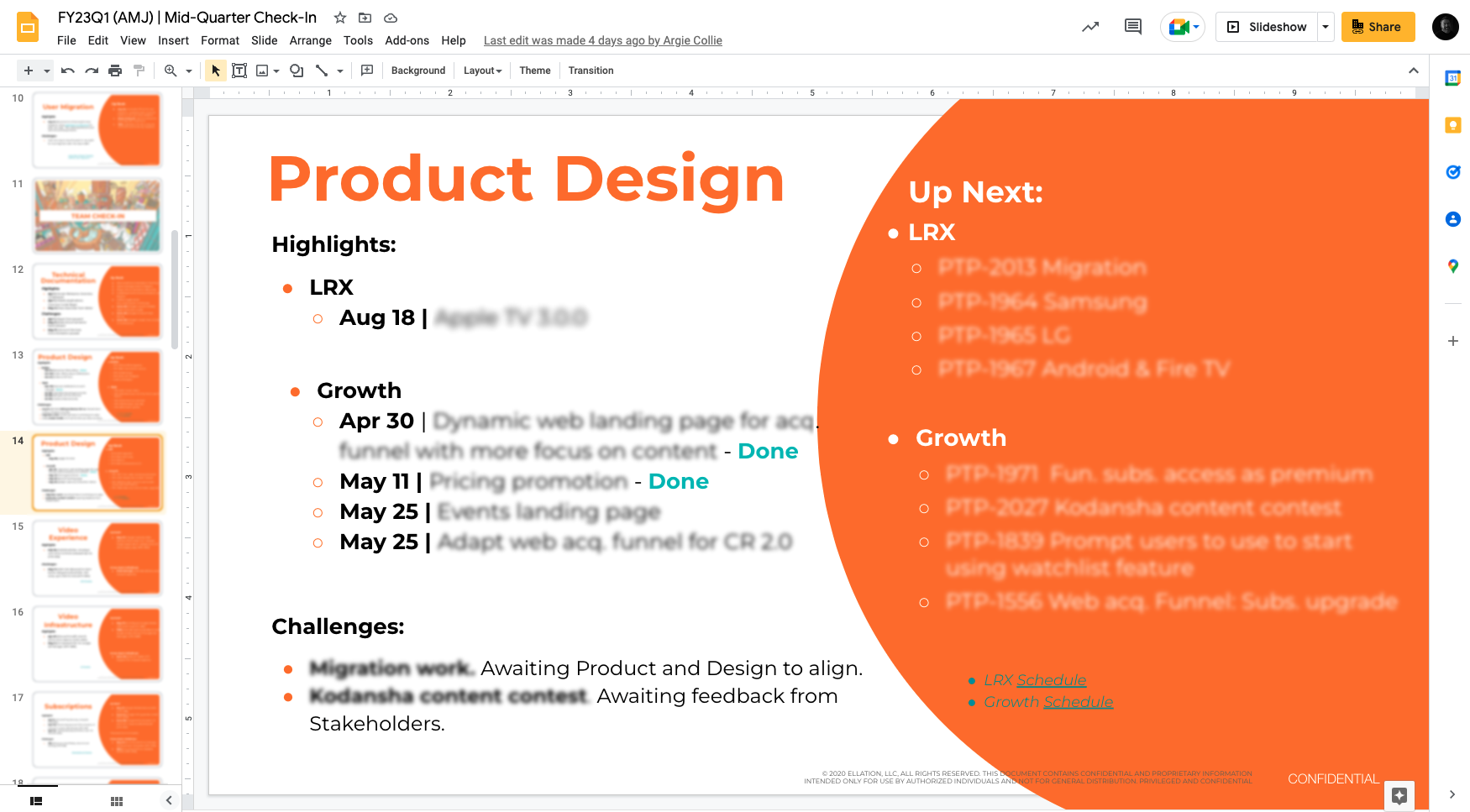
I developed a comprehensive design roadmap, coordinating with design, product, and development teams to set priorities and manage dependencies.
Product Discovery
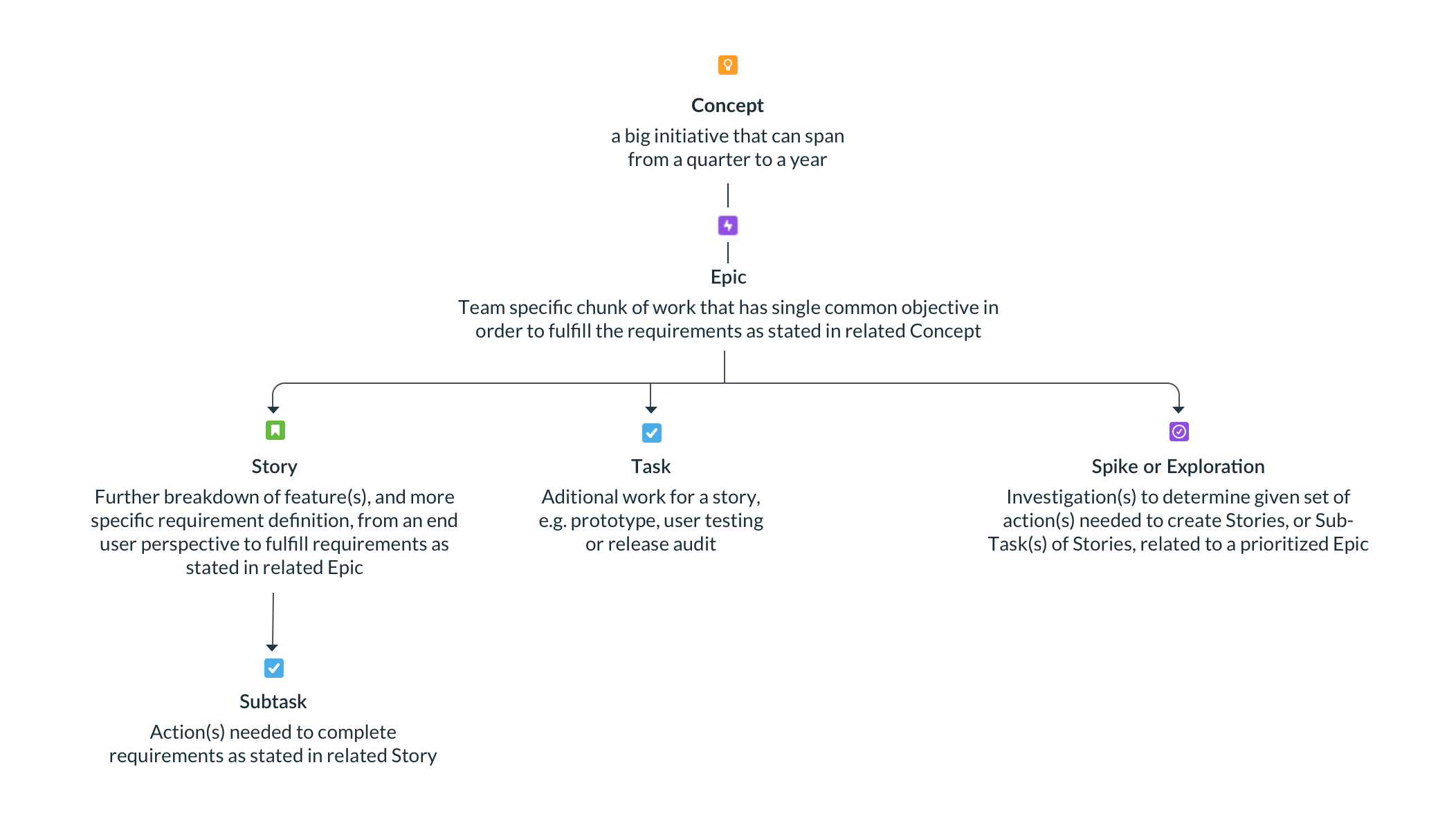
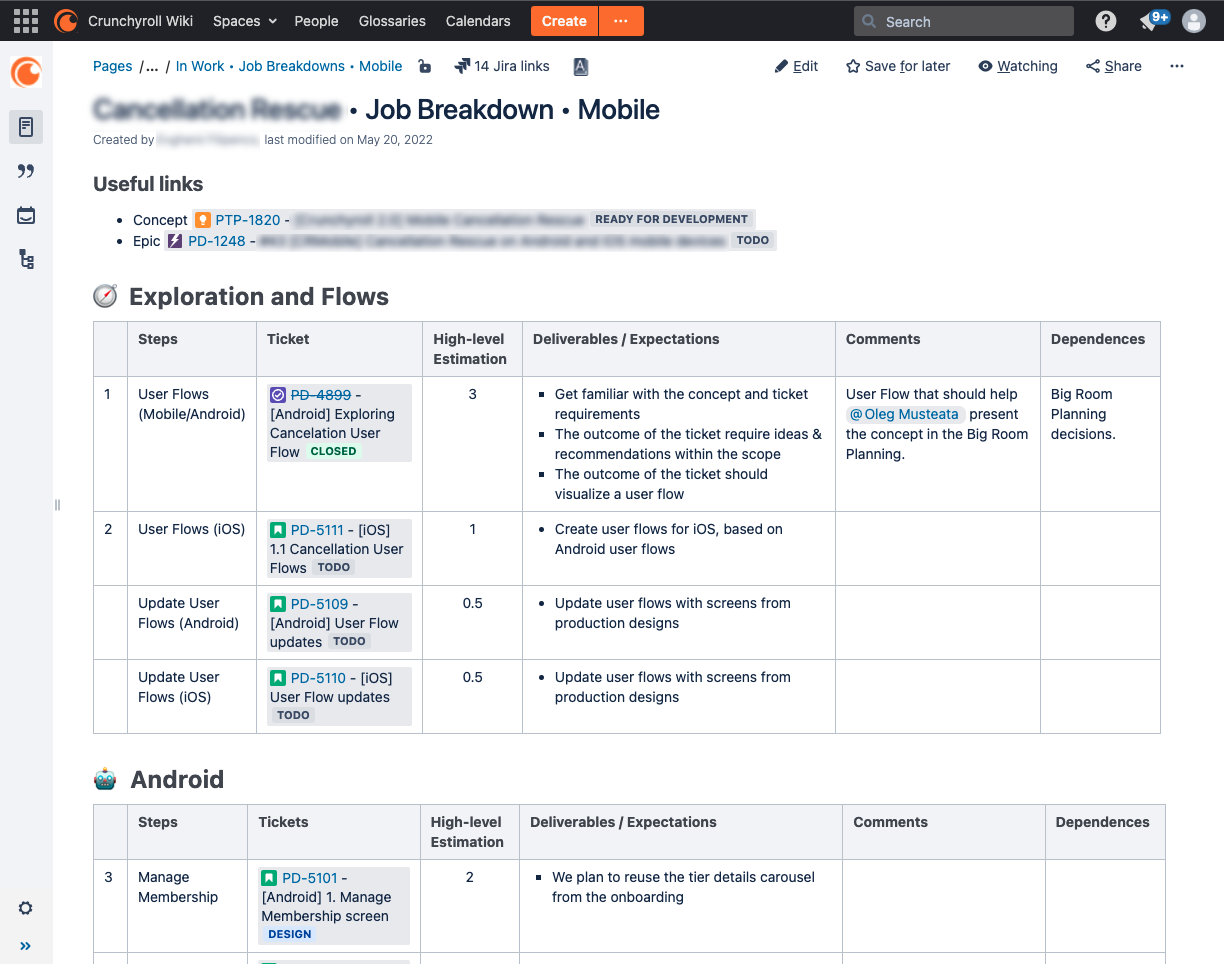
Collaborated with Product Managers and Lead Designers to define hypotheses and solutions early. Implemented a Design Breakdown to structure design activities and create high-level estimations.
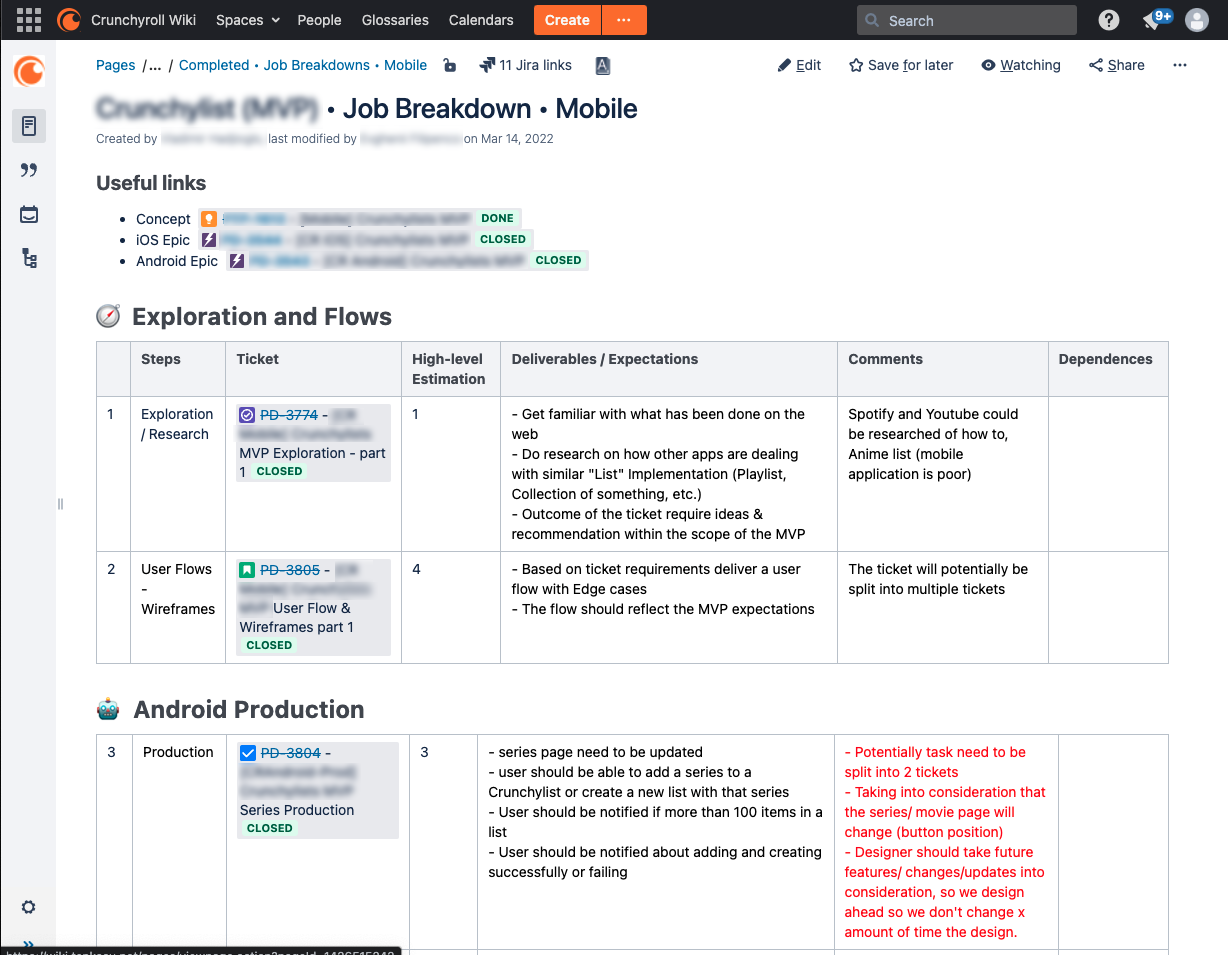
Design Job-Breakdown
Populated the backlog with design requirements, splitting the writing between PMs and designers. Ensured continuous collaboration to adapt and refine requirements as needed.
Design Approval Process
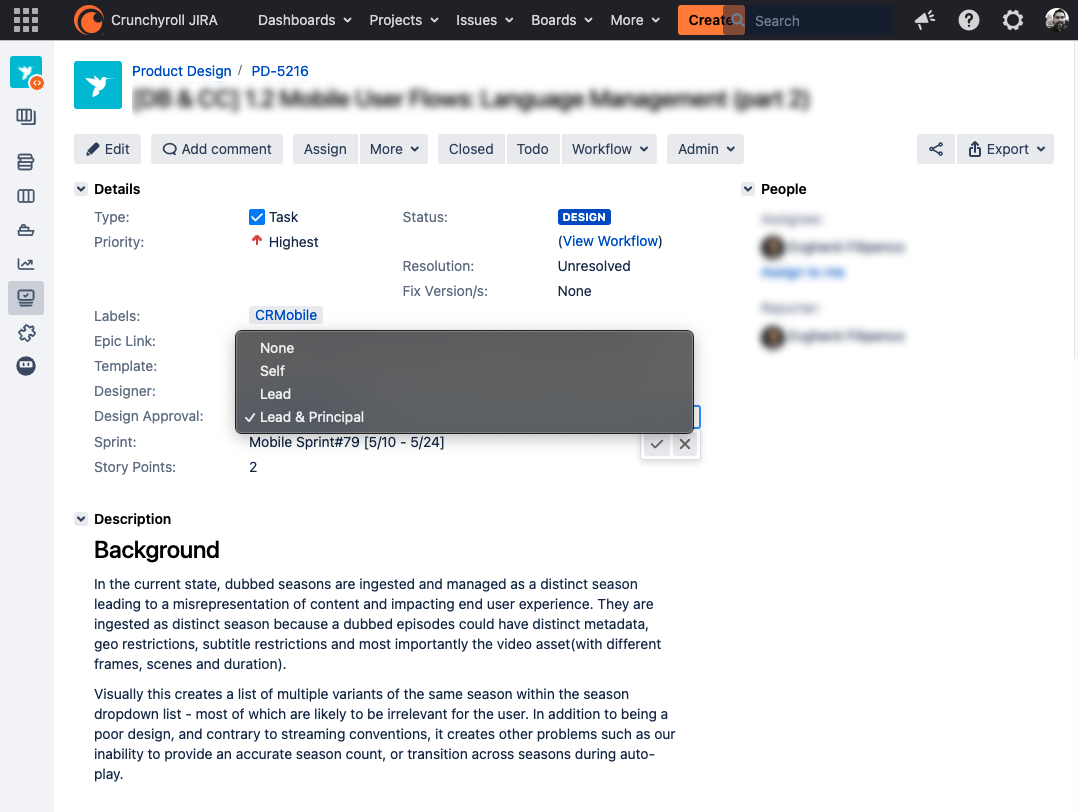
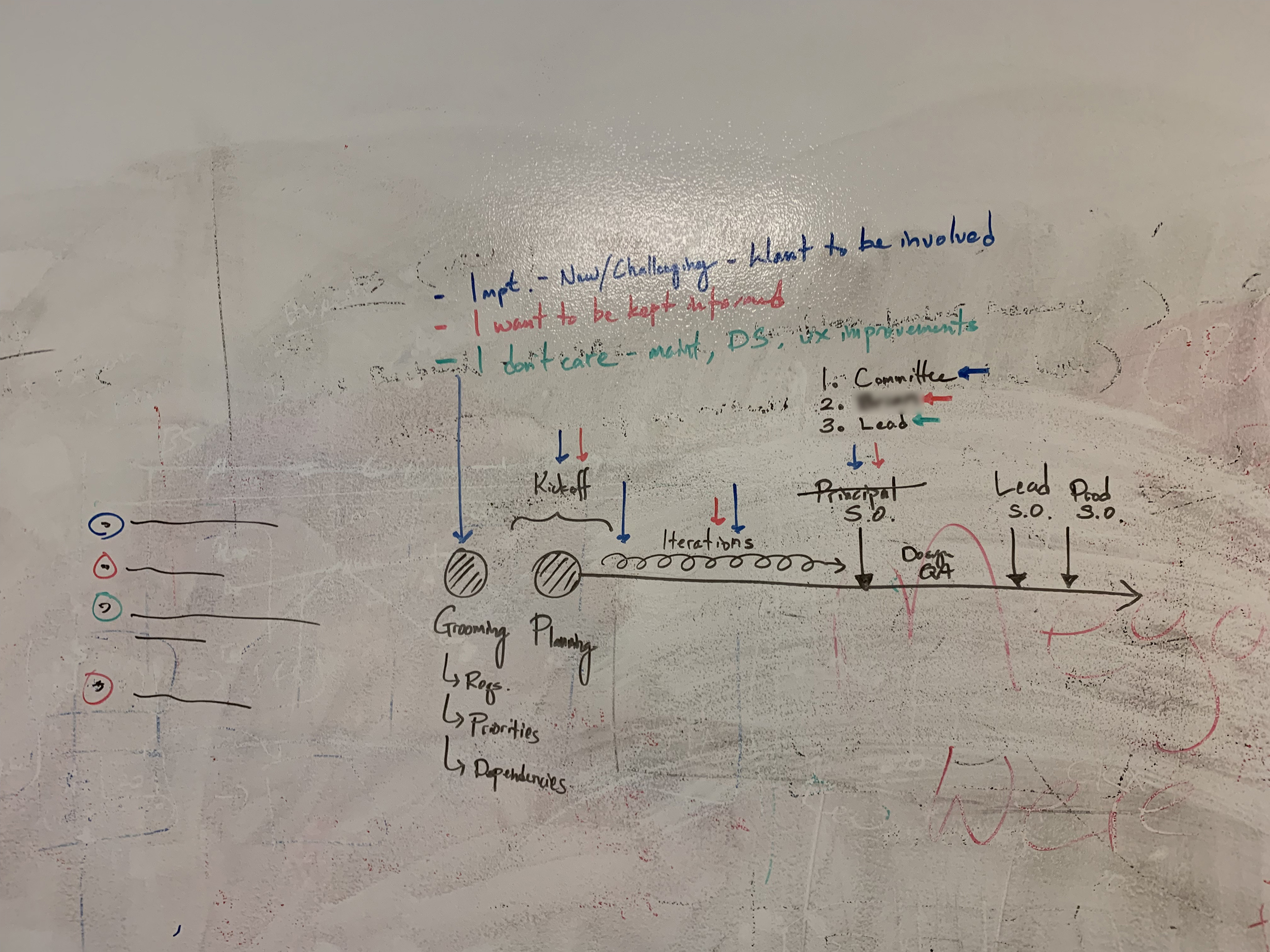
A design approval ladder was established to ensure quality and consistency, which included self-evaluation, team evaluation, and cross-functional evaluation.
- The “Self” designer determines if the solution is ready for design QA and production.
- The “Lead” Designer and team will evaluate the design.
- The “Lead and Principals” are responsible for evaluating the designs when we work on cross-functional initiatives and must ensure design solutions will work for other platforms” are responsible for evaluating the designs when we work on cross-functional initiatives and must ensure design solutions will work for other platforms.
Design Tasks
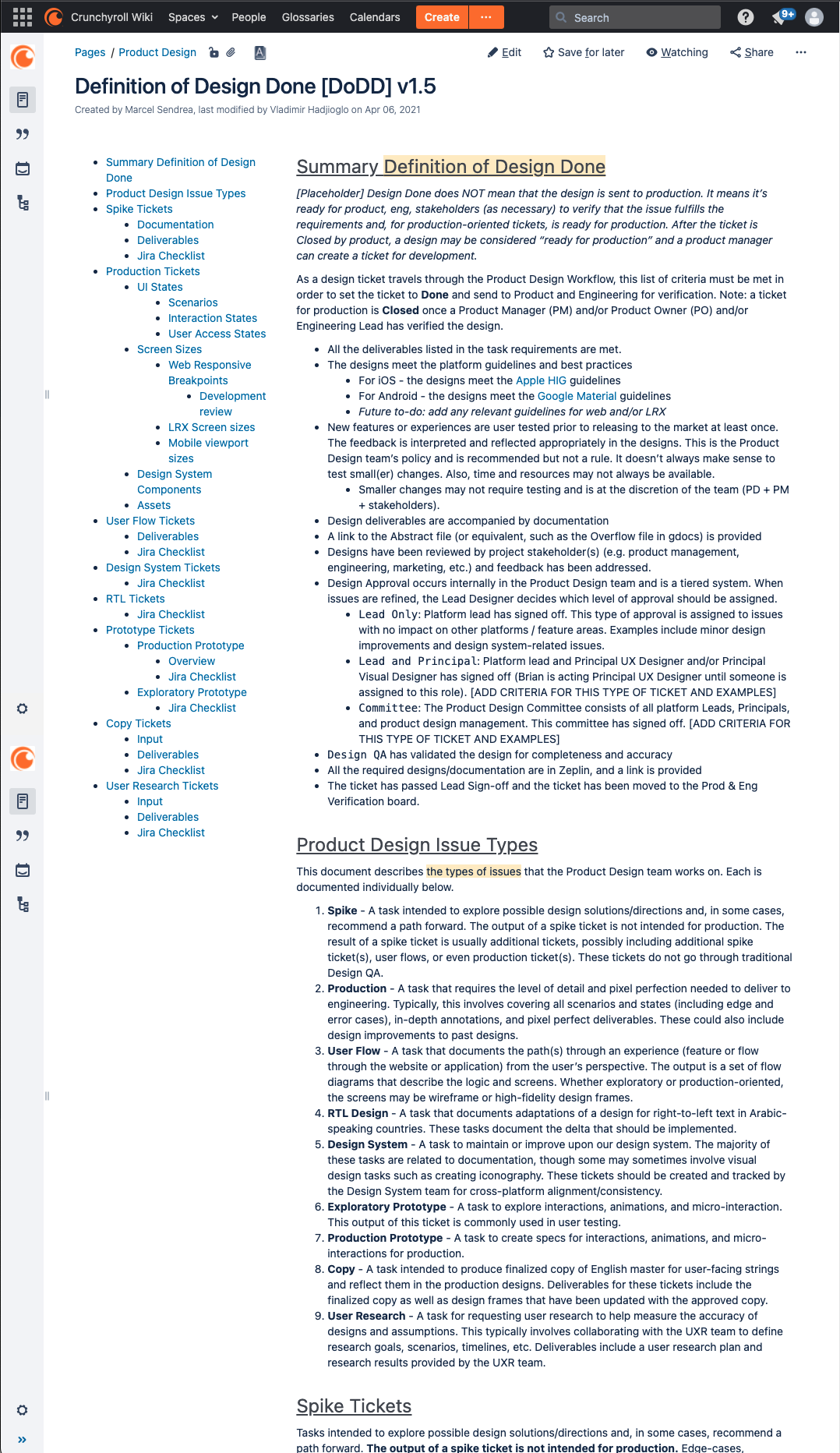
Developed Jira templates for design work to guide PMs and streamline the requirements process, reducing back-and-forth and enhancing clarity.
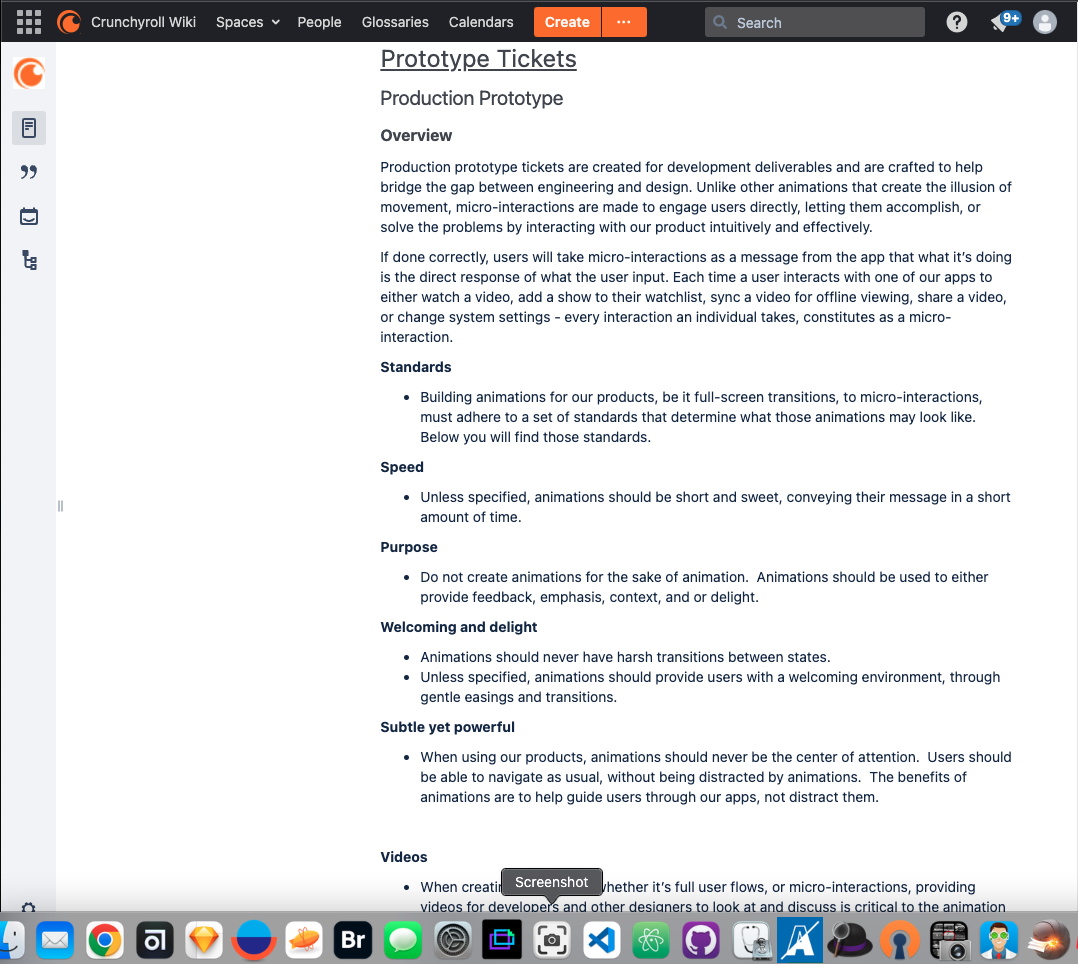
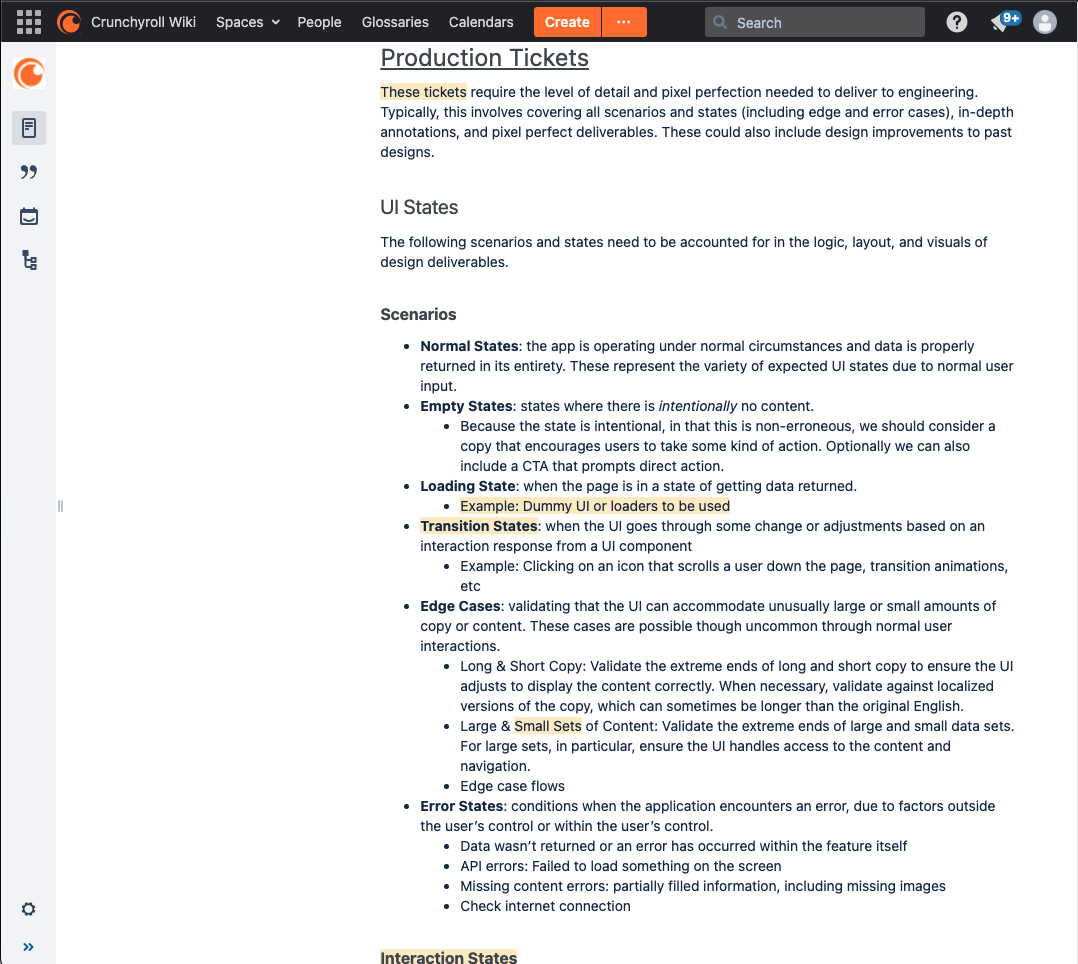
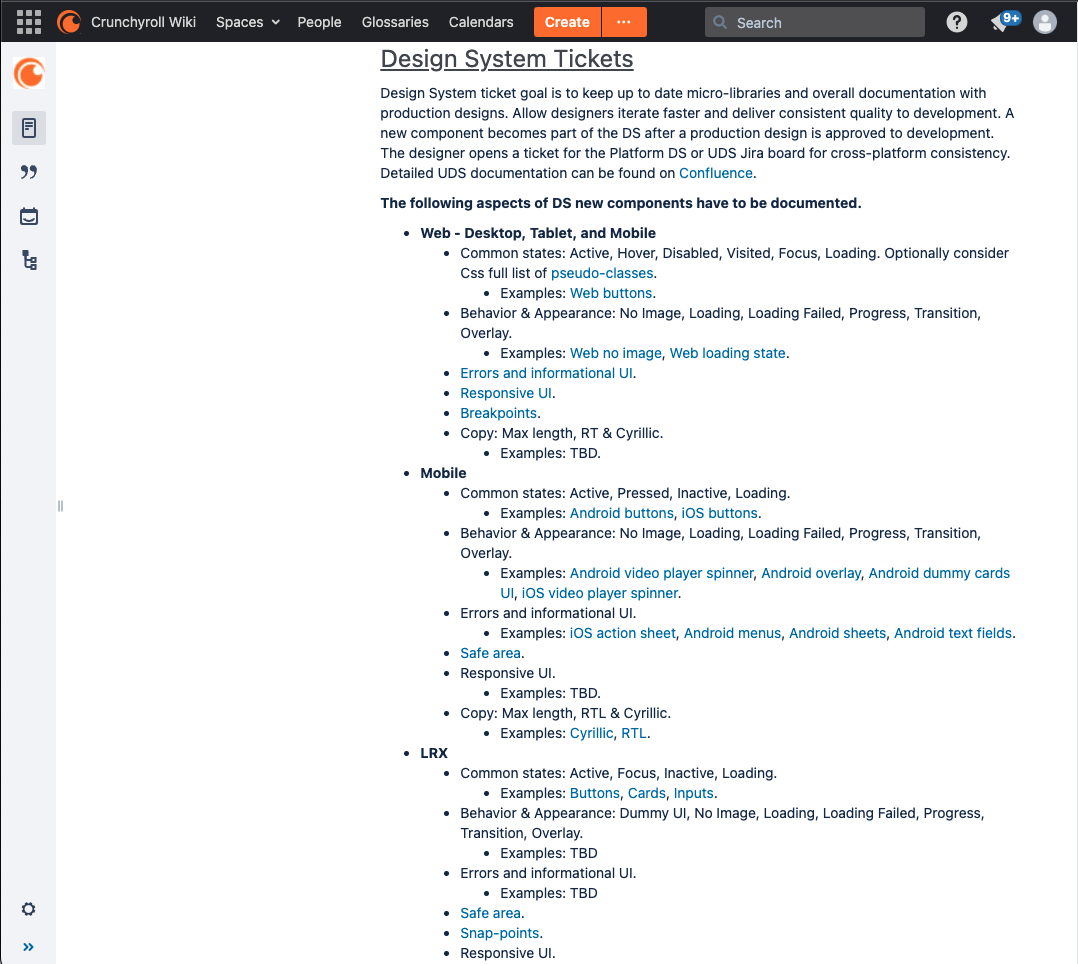
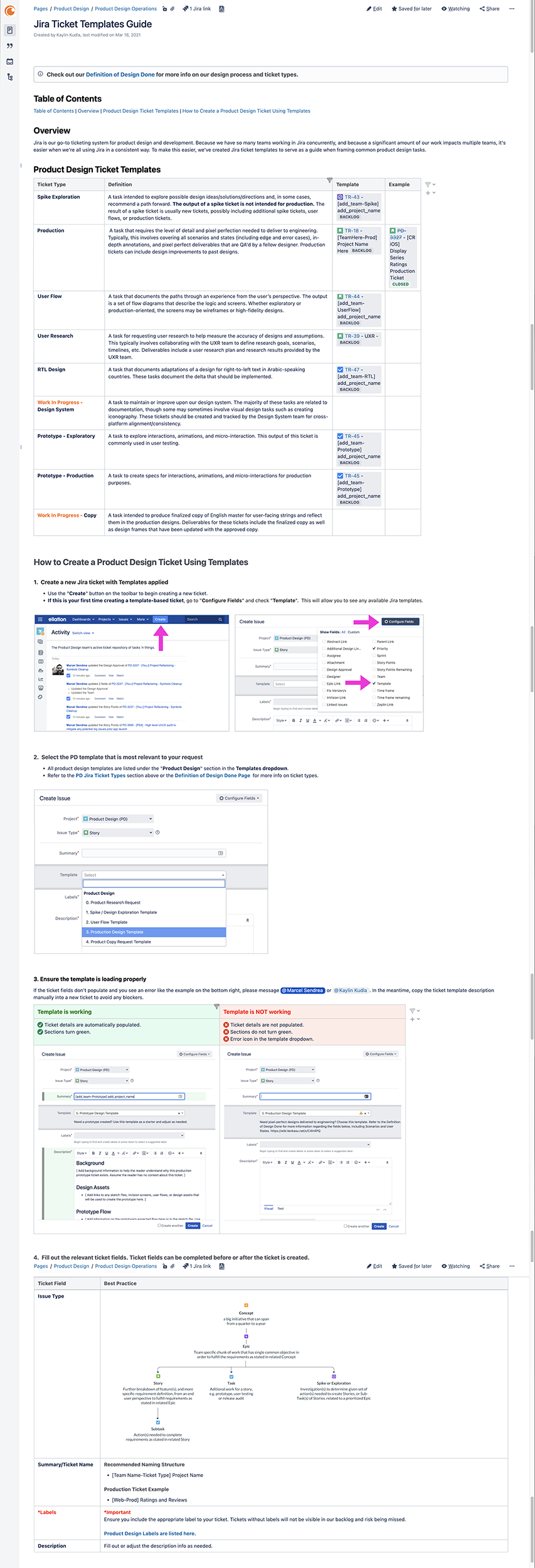

Definition of Design Done v1.5
Initially designed for VRV.co, we used it as a primer to develop technical documentation for the Crunchyroll brand. By 2022, our team of designers will be almost entirely different from the one I joined in 2017. The documentation had to reflect that because it’s a team with more seasoned experience.
Achievements and Impact
Key Success Metrics
30%
Design
Operations
Achieved a 30% increase in efficiency by implementing a roadmap, planning, and prioritizing the design work. Adapted the toolchain and built a new version of the design system. Changed the collaboration model with developers and product management.
16%
Product
Design
Increased design maturity by 16% by running more design experiments, documenting the designs, and working closely with customers by testing and evaluating designs more often.
18%
Engagement
and Satisfaction
Gave priority to internal culture and work-life balance, resulting in an 18% increase in employee satisfaction scores.
9M
Business
Impact
Contributed to an increase in Crunchyroll’s paid subscription base from 7M to over 9M by May 2022.
Conclusion
Lessons Learned
Implementing agile processes and refining design operations at Crunchyroll has led to notable improvements in efficiency, design maturity, and employee satisfaction. Key learnings include the importance of fostering innovation and maintaining work-life balance.
Future
Our PMO group is developing a new roadmap process to improve planning efficiency and better manage cross-functional initiatives. Our goal is to increase flexibility and collaboration, streamline new project planning, and complete ongoing work, which will ensure sustained success and innovation.
✌? ? ❤️